Wednesday, July 12, 2006

Sand Hills Golf Club


A brief apology up front for a longer than normal writeup. I never know when inspiration will hit and it hit in force at Sand Hills. If you want to get right to the golf course, scroll down. Otherwise, indulge me for a brief history and geography lesson to help put Sand Hills in perspective.

My view of the United States is more or less consistent with the famous The New Yorker cartoon. The United States consists of New York, some other east coast cities, New Jersey and California. Nebraska is part of the vast midwest that pretty much doesn't exist. It is a place you fly over. Why in the world would anyone want to go there? The closest that most people I know have ever been to Nebraska is to read Warren Buffet's annual letter to shareholders.

Well, I have to tell you, this view of Nebraska has been shattered for me. The Sand Hills region of Nebraska is out of this world. It is not row after row of corn fields and flat lands. Quite to the contrary, it is one of the natural wonders of this great country.

My trip to The Sand Hills Golf Club (ranked #11 in the world) began with a flight into Denver. Denver is actually the closest large city to Mullen, Nebraska where the golf course is located. It is a five and a half hour drive northeast of Denver. The overall journey to Sand Hills actually took me longer than any of my many trips to play in Britain and Ireland. You can also get to Sand Hills by taking a commuter flight from either Denver or Chicago into North Platte, Nebraska which is about an hour away, but with afternoon thunderstorms common in this part of the country, I'd rather drive. For the investment bankers, hedge fund managers and private equity followers of my blog the good news is you will be able to land your private jets in North Platte.

You leave Denver on Interstate 76 and travel into Nebraska. This part of Northern Colorado is kind of bland and non-descript. It is a high plain with a lot of scrub and frankly not a lot of beauty. Once you cross into Nebraska, it is more or less more of the same until about three hours into the trip you find yourself on state highway NE-61. The contrast to the area you have just traveled through is stark. NE-61 is one of the hidden gem, sleeper roads of this country. For beauty, NE-61 rivals driving between San Francisco and Los Angeles on US-1 or Route 112 in New Hampshire during September. It's that beautiful, although it is a stark and subtle beauty that reveals itself slowly. It is one of the most scenic roads in the country. Have I lost my mind? No, not at all. I had no idea what the Sand Hills region even was prior to this trip. I assumed there was a small area of dunes where they built a good golf course. This assumption has about the same validity as assuming that Donald Trump is modest. The reality is that the Sand Hills region of Nebraska is 19,300 square miles and takes up about 25% of the entire land mass of the state. This is larger than the states of Connecticut, New Jersey, Delaware and Rhode Island, combined! A geological anomoly, the Sand Hills region was formed at the end of the last ice age when sand was wind blown into large dunes during a severe drought. It must have been one hell of a drought indeed.

It has the biggest, most impressive sand dunes I have seen anywhere in the world. NE-61 is a two lane road that winds through the Sand Hills region. You round bend after bend and your mind plays tricks on you. You will look away and look back and think once you get over the crest of the next hill you will see the Atlantic Ocean or the Irish Sea. It is bucolic, peaceful and dramatic. You drive along rolling hills punctuated by ranches. To call the area sparsely populated is an understatement. The county seat in Arthur we drove through had a post office, bank, county courthouse, a fairground and not much else. The total population of the county Sand Hills is located in is 793. I have more people than that on just one subway train on the way to work. The beauty of the region is unexpected. You know the Monterey penninsula is going to be beautiful and the Grand Canyon. Likewise, the Pacific Northwest has a reputation for beauty as do the Rocky Mountains. This just takes you totally by surprise. Living in a metropolitan area I never really appreciated how beautiful this region of the country is.
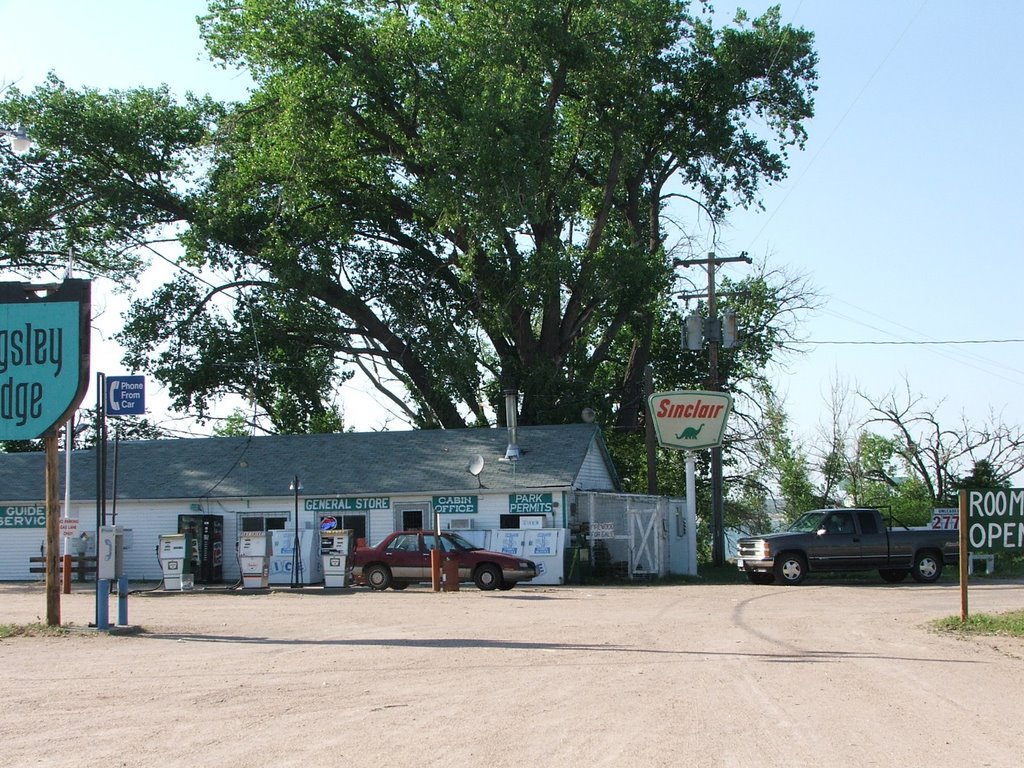


I felt at times that I was in a time warp. The picture above is of one of the 'towns' you pass through on the way to Sand Hills. In many of these places it could be 1930. You drive on NE-61 thankfully for a full hour and then you turn right onto NE-2 to make the final approach into Mullen. NE-2 parallels a Burlington Northern rail line, which has long freight trains made up entirely of coal cars transporting coal out of Wyoming. The rail line is set at the base of the Sand Hills, and here I go again, but it is a beautiful sight. A rail line, beautiful? Certainly, my mind is gone now. But, those of you that have driven it, tell me if I'm wrong.


Once you get into Mullen (population 554 and yes those are bullet holes in the sign), you turn right onto NE-97 south. In shades of Muirfield, you have to know where you are going. The club has told you to look for mile marker 55 on the left side of the road and the Sand Hills Golf Club is your next right. Once you turn off the road, it is 2.5 miles to the clubhouse. The clubhouse is a decidedly understated affair as are the cabins that guests stay in. The cabins sleep two people and are setup on the top of a hill overlooking the Dismal River. You are never given a key since the cabins are on the honor system and are unlocked. The booklet left in each room for guests warns you not to be alarmed if you hear strange sounds in the night. Deer often bed down under the cabins and wild turkeys are known to roost on the porch railings.

The Golf Course

How is it that a golf course built in 1995 and located in the middle of Nebraska is ranked #11 in the world? Well, it deserves to be ranked this high, it is that good. The land is perfectly suited for golf. Architects Bill Coore and Ben Crenshaw have done a masterful job designing the course. In 1993, they actually visited the site and 'discovered' over 130 golf holes and then proceeded to narrow it down to 18, which is the golf course the world is lucky to have today. Although the area is windy, there is no prevailing wind, so the course is routed to be playable in any wind condition. I'm not sure how you design a course as good as Coore and Crenshaw did, but they pulled it off.

I have never met Dick Youngscap, the man behind Sand Hills, but the man is an obvious genius. No one has had greater vision in sponsoring and developing a golf course since Charles Blair Macdonald when he built The National Golf Links in 1910. The entire Sand Hills Golf Club is on 8,000 acres of land. By way of comparison the East Course at Merion was built on only 120 acres. The place has sand dunes of epic proportions. Some of the dunes are over 400 feet tall. What you see at Bandon or Pacific Dunes, Ballybunion, Sandwich, Cruden Bay and Dornoch are hardly even comparable to what you will see here.

The course is located one mile from the clubhouse over sand dunes. You drive out from the clubhouse in a golf cart, across a private ranch and then arrive at the small starters cabin and outdoor grill room - nicknamed Ben's porch.

14th Green
The 14th green at Sand Hills

The course itself has NO weak holes. The seventh and eighth holes are short par fours and have fantastic risk/reward characteristics. The seventh hole, 285 yards, proves that holes like the short eighth at Cruden Bay are not out of date. The eighth in particular has a sort of bowl shaped green that if you land on the correct spot on the green the ball trickles down to a pin set right behind a bunker. The fourteenth hole also stands out as another super risk/reward hole. It is a 475 par five that most players can reach in two, particularly if the wind is at your back. It is nice as a mortal golfer to have a shot at an eagle every now and then. If you miss your shot, however, you're dead. There are severe bunkers in the back and front and the green slopes sharply from back to front. One of the best holes in the world, in my view. The seventeenth (pictured below), their signature hole, is a short par three and has a postage stamp green.

17th Hole
The 17th green at Sand Hills

Part of what makes the course shine is that every green (except 17) is accessible from the front, encouraging bump and run or pitch shots. The fairway blends into the green in a spectacular fashion. Many play up hill so you can frequently misjudge and under-club in which case you are going to be hitting the same shot again with the ball rolling back to your feet. In shades of Pinehurst #2, the fourth hole at Sand Hills has a dramatic falloff from the elevated green on the right side. Although the holes on the course are not handicap rated, this is probably the #1 handicap hole for most people. It is like Pinehurst #2 on steroids. The eighteenth hole is a long, uphill par four that played into the wind on the two days I played the course and is a worthy finishing hole given the heroic scale of Sand Hills.

At times when playing Sand Hills it feels like you are playing at Royal St. George's or North Berwick or Shinnecock, but also many of the holes have the feel of desert golf with wide fairways and 'target' tee shots. Miss your tee shot, though, and you will be chipping out of the fescue. Consistent with Coore-Crenshaw's design philosophy it is the shots into the green that you have to play well at Sand Hills

Note to golf course architects: Study the approaches and greens at Sand Hills. You don't need to put greenside bunkers everywhere to create a great course. You can walk the course, but this is the one place I recommend taking a cart - for the simple reason that you don't want to tire yourself out for playing again in the afternoon. Believe me, you will want to play at least 36 holes a day.
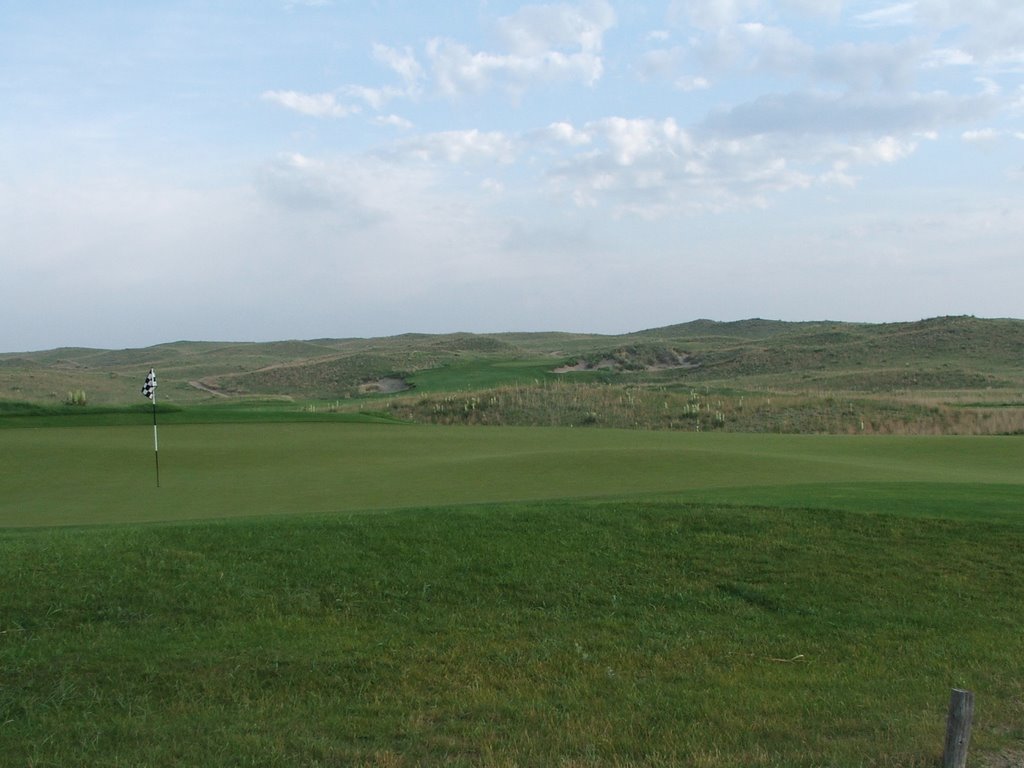


I had a very peaceful experience at Sand Hills and enjoyed the quiet beauty of the place. You can have coffee delivered to your cabin in the early morning. Each cabin has a wooden deck on the back with wooden rocking chairs. I stayed in cabin #14 which sits up on a bluff over the Dismal River. As the sun was coming up I enjoyed a fresh cup of coffee and a Havana Bolivar #2 while listening to the sounds of the water running below. It was a total state of serenity. At Sand Hills you will see no planes flying overhead. There is no background din of a distant highway. If you stop talking and just listen you will hear total silence punctuated only by the occasional bird chirping or wind blowing.
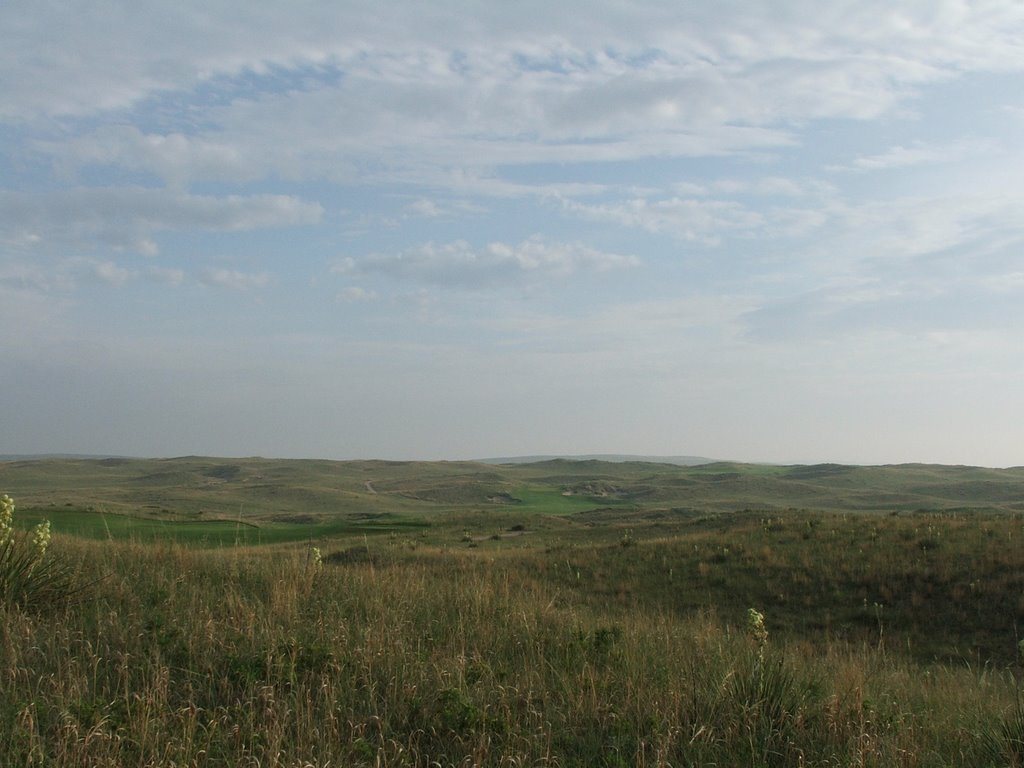


The entire time at Sand Hills, you are in-communicado. There is basically no cell phone service, blackberries do not work, there is no wireless internet connection, no internet service at all, no Wall Street Journal or USA Today. Cell phones are not allowed. The phones in your room will only let you make collect calls. You are thankfully out of it. Let's hope they always keep it that way. Although being a type 'A' personality I will let you in on a little secret of mine: cell phones do work in the bathroom of the halfway house near the first tee. It created some interesting moments during my trip when my playing partners thought I had a weak bladder, continually spending a lot of time in the bathroom, when in fact I was on the phone.

The Sand Hills Golf Club is also a maternal type of place where they look after you. The men and women there are like a long lost aunt and uncle and they take good care of you. They prepare you a hearty breakfast to order. A genuine westerner, a leather-faced cowboy in a big hat grills you either a hamburger or hot-dog at lunch at the starters cabin/grill. I was so excited driving into Sand Hills that I hadn't noticed that my car had run out of gas after the 5 1/2 hour drive. When I started it to leave the fuel light came on. The nearest gas station is 15 miles from the golf course. The nice people at Sand Hills put a couple of gallons of gas in the car for me from their own private reserve. It reminded me a lot of how people in Manhattan treat each other hailing cabs in the rain.

Eighth Green - Sand Hills
The 8th green at Sand Hills

There are few places in this world left where you can still find true peace. The Sand Hills region is one of those places. At Sand Hills I experienced a range of emotions oscillating from "Where am I?" to "This is unreal". In a post-September 11th world we need to treasure places like Sand Hills where you can still be completely at peace, can see the stars in the sky at night and disconnect from modern life and enjoy the fresh air and wide open spaces. It is a great contrast to modern life. Peace and quiet are sadly no longer valued in the world today. Sand Hills is the antidote to your asshole neighbor who uses his leaf blower at seven in the morning. It helps to heal your soul from all those times sitting in the airport with CNN blaring in your face. It helps you forget all those blowhards on the train that scream into their cellphone. And it reminds us what life was like before everyone had their iPODs and DVDs set so high that everyone around them can hear. It reminds us that peace and quiet are to be treasured and that modern life is sadly out of balance.

The course itself is rather difficult to get invited to. There are only 150-160 members who are scattered all over the world. The course is only open from Memorial Day to Labor Day. Play is limited to 50 rounds a day and an unaccompanied guest can only visit Sand Hills once without the member. If you are ever invited to play, you would be crazy to decline.

The Sand Hills region is starting to be discovered. Jack Nicklaus is building a me too course and resort nearby on NE-97 that will have its own Cessna plane to shuttle passengers in and out. While the region is hardly at risk of being over-run, resorts are starting to spring up for both golfing and for hunting. However, none will ever equal what has been created at the Sand Hills Golf Club. It is one of a kind.

My experience tells me that most avid golfers are not up on famous turn of the century female writers. I'm not normally a Willa Cather type of guy, but I found this quote from her which describes the Sand Hills region: "I wanted to walk straight on through the grass and over the edge of the world, which could not be very far away. The light air about me told me that the world ended here; only the ground, sun, and sky were left. "
Amen.


The Sand Hills region along NE-61


The Sand Hills Golf Club logo with the ranch-style motif

The Sand Hills Clubhouse


A Sand Hills Cabin

Interested in learning the methods I used to play all these spectacular golf courses around the world? then my  book may be of interest, in details how a mortal golfer may be able to do the same. Click on the image below to view on Amazon:


I hope you will find it enjoyable and entertaining.

Friday, July 07, 2006

The Old Course at St. Andrews


R and A Clubhouse

What can we say about the Old Course that hasn't already been said? The Old Course at St. Andrews (ranked #6 in the world) is hallowed ground for golfers. The course can be a little disappointing on first sight. The ground is flat and featureless, the lies are tight and usually not very good. It is not one of the most scenic courses, nor the most difficult. However, there is a reason that three of the greatest golfers of all time, Bobby Jones, Jack Nicklaus and Tiger Woods rank it at the top. The Old Course reveals its alleged genius slowly, only after you play it again and again.


The course has many hidden bunkers which you can't see while hitting your shot. The style of play is as different from what you generally get in the United States as I have found. No lush fairways and firing at the pins at the Old Course.  The view of the seventh green below is typical of the Old Course, flat and uninteresting until you hit your shot and find a hidden bunker or your ball hits a hump and bounds 30 yards in the opposite direction than you expected.


7th from tee
View from the 7th tee is typical of The Old Course, it looks like there is no trouble, but beware

I found one of the more difficult aspects of playing the course to be the double greens, which can leave you with some very long putts.

11th green
The eleventh green at The Old Course, St. Andrews with its deep bunkers and humps

The seventeenth, the Road Hole, is one of the best in the world without a doubt. It is a classic risk/reward hole on both the first and second shots. Take an aggressive line over the hotel and have it pay off, and you will be rewarded. Mis-hit it and you will pay the penalty sharply. The Valley of Sin on the eighteenth provides a unique challenge, still not equaled on any other course. Pictures tend to flatten out hollows and hills on golf courses; it is more severe in person than it looks in pictures.

Valley of Sin 2
The 'Valley of Sin' in front of the 18th green on The Old Course

The first time I played the Old Course it was on a beautiful day with a dear friend visiting from the Punjab region of India and we didn't quite get why the course is so highly rated. Like many first time visitors it appeared to be flat and not particularly interesting except the finishing holes which are historic and interesting.

At the Old Course,  it is hard not to play the tourist, and take a shot standing on the Swilken Bridge and of the magnificent R & A clubhouse. I don't care who you are, hitting off the first tee on the Old Course is one of the most special and rewarding things a golfer can do in his or her lifetime. It is probably the widest fairway in golf but you are indeed quite nervous hitting that shot.

swliken burn 1
The Swilken Burn guarding the approach shot to the 1st green


The Old Course at St. Andrews is best summed up by that great golf writer Henry Longhurst, who writes: "What is the secret? Partly, I think that before playing any shot you have to stop and say to yourself, not, "what club is it?" but "what is it exactly that I am trying to do?" There are no fairways in the accepted sense of the word; just a narrow strip of golfing ground which you use both on the way out and the way in, together with huge double greens, each with two flags. From the tee you can play almost anywhere, but, if you have not thought it out correctly according to the wind and the position of the flag, you may find yourself teed up in the middle just behind a bunker, and downwind. At this point fools say the course is crazy. Others appreciate that the truth lies nearer home."


I like the comments of golf course architect Desmond Muirhead who disputes the notion that the Old Course simply evolved without man's influence. He writes, "The truth is, the old course has been carefully manipulated with the same sort of refinement you might find in a Japanese garden."


hell bunker 14

The famous "Hell" bunker on the 14th hole at St. Andrews Old 


Despite all the golf history I have read and all the great and learned people who love the course, I still can't warm to it. It still appears mostly flat and uninteresting to me except the last four or five holes. For certain, the course is over-rated as the #6 ranked in the world. It is fine to play once to have the experience but I find on subsequent visits I find the course less interesting. I would rather play nearby Kingsbarns, Crail or Carnoustie if in the area, rather than the Old Course again. The tees are too close to the greens and you have to watch flying golf balls everywhere you turn especially when near the holes around the Eden Estuary (9th-12th) where the holes criss-cross. The rounds at the Old Course are usually very slow as well, given all the play it gets.

Getting on the Old Course


Of all the courses in the top 100, The Old Course is not one of the most difficult to get on since it is essentially a public course, but you have to either spend a lot of money or be persistent. The rules are rather Byzantine and you can find them on St. Andrews Links Trust Web Site. Essentially there are three ways the layperson can get on the course: 

1. Book well in advance and pay one of the tour operators for access. This requires that you stay in the town of St. Andrews for two nights. The effective cost of your round of golf is about $1,800 per person.

2. You can walk up and stand in line early as a single and your chances are probably 80% of getting out. I tried this on one very cold October morning and arrived at 6:00 am. I was the fifteenth person in line and did get to play at around 1:30 pm so I counsel patience. The gentleman who was first in line arrived at 2:30 am and had a sleeping bag. He got off around 10:00 am.

3. You can apply to the daily lottery, where a percentage of tee times is allotted each day to a random drawing. The cost to play the Old Course is about $250. George Peper, in his entertaining book about St. Andrews, estimates the chances of winning the lottery to be about 35% in season and 95% off-season (during the winter basically). My guess is these odds are about right having tried the lottery a couple of times without success in season. Unique among the top 100 in the world, St. Andrews actually posts the tee times and players going out the next day: List of Tomorrow's golfers at the Old Course .


If you can't get on the Old Course, the New Course right next store, designed by Old Tom Morris in 1895 is very good.

The Old Course has one of the largest memberships of any course on the top 100 list. It has 1,800 members. 1,050 are from Britain and Ireland, 275 from the U.S., 110 from the old Commonwealth countries and 50 from countries not included in the above. There are no women members. One of golf's sanctum sanctorum is the Big Room in the R & A clubhouse. Unlike almost every other club in the world where guests are allowed into the clubhouse, unless you are playing with an R & A member, you are not granted admission into the clubhouse. The Big Room is the one that overlooks the first tee with a floor to ceiling set of windows. Mental note to self to get inside the clubhouse one day.

Thursday, July 06, 2006

Royal Lytham & St. Annes


The Dormie house in front of the putting green at Royal Lytham & St. Annes

My stay at the Royal Lytham and St. Annes Golf Club (ranked #54 in the world) was my first opportunity to experience one of the unique aspects of playing the world's top 100 golf courses - staying at a Dormy house. Dormy being short for Dormitory. About a dozen courses in the top 100 have Dormy facilities including Royal St. George's, Pine Valley, The National Golf Links of America, Augusta National and Sand Hills.

It was the first time I had slept anywhere with a communial shower since college. Being a Ritz Carlton-Four Seasons type of guy I was a little worried what the accomodations would be like but they turned out to be fine. There aren't many amenities - there is a common TV, common showers, common toilets and no frills, but it really helps you get into the spirit of golf and is a nice shock treatment to start off a golf trip.

My day had begun 24 hours before with an early morning meeting with my boss and a client lunch in New York City, a trip back to the office and a night flight over the Atlantic in coach. Upon landing, we drove directly to the course, had lunch, played and retired to the bar in the Lytham clubhouse for drinks and sandwiches. Thus, we took full advantage of the best aspect of a dormy house, besides the camraidarie; the ability to walk 100 feet from the bar and crash in your bed, which I did.

As I have mentioned repeatedly, I am not a fan of the out and back layout which Lytham is, but I thought the course was good. It actually reminded me more of The Old Course at St. Andrews than any other course. Flat, but with a lot of hidden bunkers, more than 200 to be precise. They are classic turf riveted links style bunkers, small, and mostly round and if you are in them they give you little chance but to hit out sideways or to advance the ball only a slight amount.

I can see how the course would grow on you over time. I did like starting on a par three (pictured below); at Lytham it is a testing long iron. I also thought the 18th was a good finishing hole with the clubhouse virtually up against the green. We played Lytham with a stiff wind (3+ clubs) so it was a real test of golf.


I think Lytham is rated about where it belongs in the middle of the pack. Bobby Jones won the Open Championship at Lytham in 1926. Other winners at Lytham include Tom Lehman, David Duval, Bobby Locke, Gary Player and Seve Ballesteros twice.

Bernard Darwin had this to say about the then named "St. Anne's". "St. Anne's is very smooth and trim, and just a little artificial. If the day is calm and we are hitting fairly straight, the golf seems rather easy than otherwise. If there is a strong wind blowing we shall not even be tempted to think it easy, for there is plenty of rough grass on either side, which seemed so simple, will be a cause of considerable anxiety."

The "signature" hole at Lytham is the 17th, where many championships have been decided. Adam Scott can certainly attest to this having bogeyed the hole in route to his epic loss at the open in 2012. Bobby Jones took the lead on this hole from Al Watrous en route to his championship.

Jones teeing off on the 17th hole at Lytham at the Open Championship in 1926

The hole is featured as one of the top 100 courses in the world in the book published in the book published by Golf Magazine in 2000.

The 17th at Royal Lytham & St. Annes

Like almost all courses in Britain, Royal Lytham is accessable to guests provided you arrange play in advance and follow their rules. Lytham's website.

Friday, June 30, 2006

Royal St. George's - Sandwich

Sandwich Bunker
Bond. James Bond. The famous golf match between James Bond and Auric Goldfinger is set at the fictional stand in for the Royal St. George's Golf Club (ranked #33 in the world) - Royal St. Mark's in the book. Ian Fleming served as captain of the club.

Royal St. George's Golf Club is near the town of Sandwich, which is historically what the club has been known as. The course is located about 2 1/2 hours southeast of London. When reading the autobiographies of Bobby Jones, Walter Hagen or early golf books, Sandwich is referred to often as it has always been a championship quality links course.

I rate it overall as the best golf course in England. I have never been a fan of the out and back layout and Sandwich is not one; it provides a superior routing of holes. There are no parallel holes and a constant change in hole direction, which is very important when the wind is up, which it often is.

The day I played at Royal St. George's, the wind was up. The temperature was roughly 50 degrees and the wind was blowing at a sustained 25 mph with higher gusts. We arrived and were greeted by the Caddie Master who was right out of central casting. A giant of a man, he was wearing shorts and long socks. Many golf clubs in Great Britain frown upon the wearing of shorts unless you have on 'long socks'. Many courses in Britain send you a list of rules when you make your booking and they tell you whether or not you have to wear a jacket and tie, admonish you to play fast and stipulate the minimum handicap required to play the course (generally between 18 and 24). And usually lurking somewhere in the rules is a long sock rule. The long sock rule says that if you wear shorts, which they don't really want you to do, then your socks must come up above your knee. He was very accommodating and warned us it would be a difficult day. We then went into the pro shop and had a nice discussion with the head professional, Andrew Brooks, who said at least four times 'it will be difficult today with this wind'. Although it was late May, the temperature with the wind chill was in the low 40s. I have found that generally in the British Isles the locals downplay the weather and wind specifically, saying it is a 'gentle breeze' or 'nothing'. When the understated English tell you the wind will be ferocious, it is time to panic. A hearty man indeed wears shorts in this weather.


RSG

Well, the pro and caddie master were right. It was a very difficult days golf. Never-the-less, the greatness of the course came through and it was a very enjoyable day indeed. We enjoyed lunch in the members dining room with the requisite jacket and tie. We had a drink served in their signature silver tankard and lunch was a very classy affair. Muirfield has a deserved reputation for a good lunch and a lot of history but Royal St. Georges's gives it a run for the money on both fronts.


The English have a great sense of tradition and respect for rules and authority, especially among the upper crust. After lunch as we were changing out of our jacket and tie into our four layers of clothing that would be necessary to keep warm, I noticed the accents in the locker room were more polished that those I have heard throughout Scotland and England. No cockney accents at Royal St. George's. Think Prince Charles. The smoking room has a wooden board up above the fireplace listing previous club Presidents and it confirms Royal St. George's place among the connected in English society. Among the Presidents there were four Right Honourables, A Most Honourable, two Sirs and a Lord. The abbreviations after the names includes Knights, members of the Orders of Chivalry and military decorations: K.G. (Knight of the Garter), C.B.E. (Commander of the Order of the British Empire), K.T. (Knight of the Thistle), M.C. (Military Cross), D.S.O. (Distinguished Service Order), K.C.M.G. (Knight Commander of St. Michael and St. George), T.D. (Territorial Decoration), D.L. (Deputy Lieutenant) and a K.B.E. (Knight Commander of the British Empire).


I can't say enough about how grateful I am to clubs like Royal St. George's for being so accommodating for visitors. Luckily the tradition of being open and accessible to visitors is greatly appreciated and they make you truly feel welcomed (Royal Troon take note).

I found three holes at Royal St. George's to be particularly good. The par five 14th hole, "Suez Canal" (pictured below) has out of bounds down the entire right side and a burn/swale in play off the tee. You can't just wail at your second shot, since short of the green there are bunkers on the left side of the fairway and the fairway narrows to about 25 yards. Yet, if you can thread the needle and land in that area you will likely be rewarded with a birdie; otherwise you will pay the price. The fairway bunkers 80 yards short of the green will penalize you if you try to get the ball to the green. Even this close to the hole, you have to just get the ball out as your first priority. It is a hole you really have to use your head to play well.

The #1 handicap hole, the eighth, is a dogleg right and has a very interesting and challenging green complex that is artfully bunkered. Your second shot to the green plays downhill and usually downwind. Very tricky.

The fourth hole, Sahara, has an enormously large bunker on the right side of the hole. You hit from an elevated tee to a fairway that is wildly undulating and the green is even wilder. If you hit long past the green you are in the backyard of a local resident. Definitely a unique hole.

RSG Great Par 5

Henry David Thereau once said the most men lead lives of quiet desperation and he was right. Although at one of the best golf courses in the world, for a few holes the wheels really came off due to the wind. Wind destroys a golfer's tempo and gets in your head. I much prefer playing in the rain to playing in a strong wind. Try losing your swing in a four club wind in the middle of a golf trip to play the championship courses of England. 3,500 miles from home, you begin to doubt everything.

Sports psychologists will tell you that you will play your best when you don't have any swing thoughts. Pick a target and hit to the target. Your mind should be uncluttered. A zen-like state is best, you should be focused in the present. I was in the opposite state. At this point in time, my stream of consciousness was something like what follows: What am I doing out here? Why am I not home with my wife and children? Why did I take up this game in the first place? I am a complete dumb-ass. My handicap is too high to be trying this. I should go to church more often. I should call my mother more often. I should really floss more often. I really should have put on clean underwear this morning. I left the office for a week with a lot of dysfunction and people taking shots behind my back. I could be back sucking up to my boss. As the top 100 course located closest to a nuclear reactor it is only fitting that I had a core meltdown at Royal St. George's.

The normal solitude and peacefulness of a golf course is turned into your enemy and not your friend. As you may have guessed, someone who is crazy enough to take on this journey might be a bit compulsive and obsessive. So you extrapolate your bad game infinitely into the future. You'll never be able to hit the ball again. I walked four holes with my head down and my chin on my chest and lost a disproportionate amount of balls in a short period of time.

One of the things I love about this great game is what it teaches you about yourself and about life. Never give up; keep persevering; forge ahead. I didn't walk in. I didn't give up, I played on and got my swing back. Like life, golf forces you to keep reinventing yourself. The swing you had two years ago it probably not the swing you have today. Mine changes often but thanks to the pro at my course, we always seem to be able to cobble something together again no matter how bad the wheels fall off. Life, like golf, is not easy. It is a constant struggle. Just when you think you have it figured out, it reaches up and bites you.


In a nice touch, the pin flags at Royal St. George's are the English (not British) flag. It took me a while to figure out but it makes sense when you learn that the English flag, which is a white background with a red cross, is called St. George's cross.


The course is so good that even the distant views of the nuclear cooling towers can't spoil Royal St. George's. I am putting Royal St. George's on my short list of courses to return to, to play again; hopefully, next time with the wind down.

Thursday, June 15, 2006

Hoylake - The Royal Liverpool Golf Club - Far and Sure

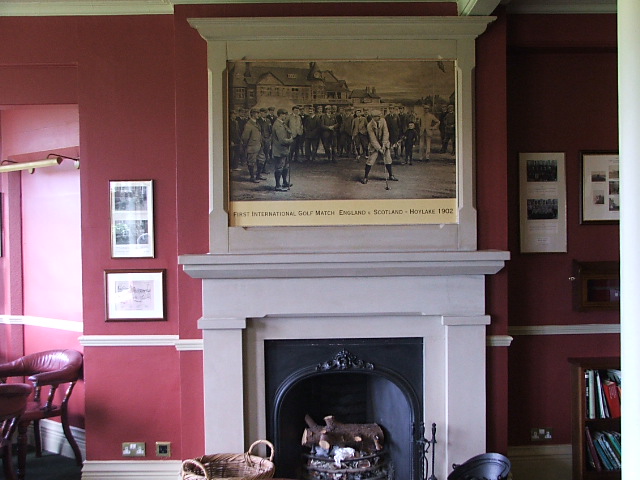
Hoylake Clubhouse
Royal Liverpool's historic clubhouse

Wow!

Legendary. Historic. Welcoming. A classic golf course. World renowned history. Welcome to the Royal Liverpool Golf Club (ranked #72 in the world), also known as Hoylake after the town it is located in. It has been 39 years since the R & A has held the open championship at Hoylake and the world is in for a treat. The last open held there was before the massive media and television coverage golf receives today. This is one of golf's true gems and the opening will most likely be its coming out party to the modern era of golf.

Hoylake is the third oldest course on the top 100 list, built in 1869, it is pre-dated only by The Old Course at St. Andrews and Carnoustie. The first Amateur Championship was held here in 1885. The course has hosted the open championship ten times. This is one of the four courses Bobby Jones won the grand slam on in 1930, winning the open championship here that year. The clubhouse at Hoylake displays its history better than any other we've been to yet. Where else in the world are there the signed original winning score cards of Bobby Jones, Walter Hagen and memorabilia from two of golf's early historical figures John Ball and Harold Hilton?

The one knock you hear about Royal Liverpool is that it has too many holes that have out of bounds and in particular too many with internal out of bounds, known locally as 'cops' which allegedly makes for bad golf. There are 10 holes that have an O.B. My view is that the 'rule' among golf's cognoscenti that too many O.B.'s makes a bad course is complete rubbish and Royal Liverpool proves it. Even for a non-scratch golfer, such as myself, I didn't find that the O.B. came into play that often. When it does, it is very strategically placed and you are duly penalized for hitting a poor shot.

I played the course recently while it was being prepared for the Open Championship. Located about 15 minutes outside of Liverpool on the Wirral peninsula, you leave the City of Liverpool through the Queensway tunnel. The tunnel is over two miles long and winds its way under the Mersey in an unsettling fashion for those who aren't used to driving on the left side of the road. Once you pull into the course the dramatic clubhouse (pictured above) is most inviting. The course is behind the clubhouse and is dramatic. Half the grandstands were up and the course was re-configured with the new routing. The original first hole now plays as the third, the 17th plays as the first and the 18th as the 2nd. Holes 4 through 18 continue in the original order, previously having been the 2nd through 16th holes. I found every hole to be a good hole. The routing is interesting and varied. The use of bunkers is very strategic. For example, on the 4th hole, a line of bunkers on the left forces you to hit where the fairway narrows on the right side with no margin for error.


Liverpool 1
A hole we are adding onto our list of the world's best is the third (pictured above), formerly the first. It is a terrifying par four with a dogleg right. The tee shot doesn't look that hard, but it is. You flirt with O.B. on the right off the tee and aiming left leaves you a longer shot into the green or in the rough. The dogleg is sharp and after the turn in the dogleg the whole is ruler-straight, with O.B. all the way down the right. There are NO bunkers on the hole but it is one of the best par fours in golf. I couldn't imaging how much harder it played being hole #1 without warming up first.

Holes 11-15 along the River Dee are gorgeous as you overlook North Wales across the way. The day we played the course there was a 4+ club wind. You had to aim your tee shot on the 151 yard par three 50 yards left at the TV tower setup off the green in preparation for the open. And even then your ball was blown off the right side of the green. It was good playing Hoylake in its difficult wind-blown condition, which it has a reputation for.

Liverpool Dining


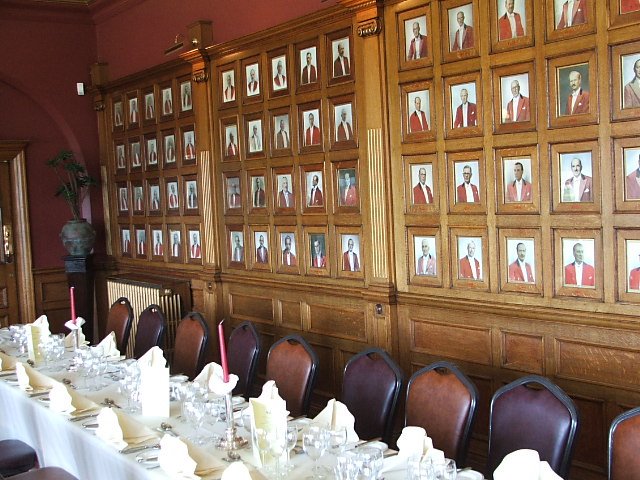
The clubhouse is one of the most inviting, intimate and welcoming in the world of golf. They have a world class golf book library, memorabilia second only to the R & A and an awesome dining room with pictures of every club captain going back to 1885 wearing the red jacket bestowed on the office-holder.


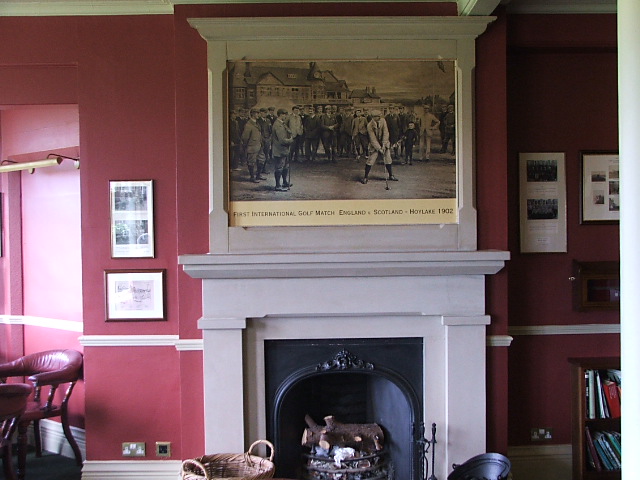
Liverpool Smoke Room
The Smoke Room in the Royal Liverpool Clubhouse

Congratulations to the R & A for putting Royal Liverpool back in the rota. Now to really make things interesting drop either Royal Troon or Royal Birkdale and play the open here at least once a decade my friends!

Royal Liverpool should be ranked at least 30 places higher on the world rankings. Of the three world ranked courses on the Lancashire coast of England near Liverpool England, Hoylake is the best, easily a better course than both nearby Royal Lytham and Birkdale. Thus far, if there is one club overseas I would like to join, this is it. The place has it all.

As the club's motto says - Far and Sure!

Post Script - July 2006

Congratulations to Tiger Woods, The Royal Liverpool Golf Club and the R & A for hosting a fantastic championship. Hoylake proved beyond a shadow of a doubt that it belongs back in the rota with a regular spot. I look forward to visiting again and seeing Tiger's signed winning score card hanging alongside Jones and Hagens in the downstairs bar. Great courses produce great champions.

Saturday, June 10, 2006

Walton Heath


Walton Heath - Old (ranked #82 in the world) counts among its members four prime ministers including Sir Winston Churchill. The course has a rich history linked with the English aristocracy, founded by well-to-do Edwardians, the successful upper class, an elite of titled gentleman and prosperous businessmen. The atmosphere has always been one of high rank and impeccable social standing. Among its former members it counts: 26 dukes, lords, knights and honourables. In the early days nobody could be proposed as a member who was not 'received in general society'. It is the only English club that has had a reigning monarch serve as captain.


Green detail at Walton Heath

Walton Heath also hosted the 1981 Ryder Cup. The course itself is a lovely heathland course. It really shines around the greens with its contouring (pictured below). The course has no water or water views and limited greenside bunkering, which leads to a lot of bump and run shots approaching greens if you so desire. Like its more famous English course Royal Lytham, Walton Heath starts with a good par three and has a particularly good set of finishing holes.
The rough hewn land at Walton Heath

Walton Heath is on the world's top 100 courses due partly to its affiliation with five time open Champion James Braid who served as club professional between 1904 and 1950.

Friday, June 02, 2006

Royal Birkdale


The best golf course in England.

NOT!

Royal Birkdale Golf Club (ranked #28 in the world), ranks as the highest ranked course of all of the nine English courses on the list. I adamantly disagree about its placement. I would say it's the best golf course in England after the following courses: 1. Royal St. George's; 2. Royal Liverpool; 3. Sunningdale Old; 4. Woodhall Spa; 5. Ganton; 6. Royal Lytham & St. Annes; 7. Walton Heath and 8. Wentworth West. While I'm not a math genius, I think that would make it the lowest ranked course in the country.

The course is not near enough to the ocean to give it any views and I don't think it has any truly distinctive holes. The course has hosted many Open Championships because the R & A likes the flat routing surrounded by dunes because it makes for good TV viewing. But don't mistake good TV viewing for a good golf course. They are not one in the same.

And what's up with that clubhouse? At first I thought it was just bad c1970s architecture. The clubhouse was actually built in 1935 and is art deco, having the look of a ship. But it just doesn't work. There is no sense of purpose or tradition to it. The interior spaces don't work either. White is a terrible color for the outside as it is too stark a contrast to the links terrain and it does not fit in with the landscape.


For a club formed in 1889 you would think you could get a better sense of history or tradition walking around the clubhouse. But the place is flat. Walking around the other English courses your spine tingles with excitement and history. The Bobby Jones perfect card at Sunningdale, the grandeur of Royal St. George's, the museum like quality of Hoylake, the traditions of Royal Lytham. Walking through the Birkdale clubhouse felt like walking through a hospital corridor. They have hosted two Ryder cups and eight open championships but they don't use it to their advantage.

Sorry boys, but Birkdale is missing that certain je ne sais quoi.

Thursday, June 01, 2006

Halfway There - 50 of the world's top 100 completed!


I recently returned from a golf trip to England and the trip marked a significant milestone in my quest to play the world's top 100. The lineup included many Open Championship courses: Royal Liverpool (Hoylake), Royal St. George's (Sandwich), Lytham & St. Annes, Royal Birkdale; and two heathland courses: Walton Heath and Woodhall Spa, the last course being so good I couldn't resist going back again, having played it last year.

When I have time I will post a more detailed write-up of each new course, but in the interim, having completed 23 of the 24 courses in G.B. and Ireland (only Loch Lomond remains), I would like to reflect back on how good golf in the British Isles is. First, the great courses are accessible to golfers who appreciate the game and respect their rules; Second, the post-golf experience has been perfected, sitting in the cozy smoke rooms and bars (scenes from Royal Liverpool below) enjoying friendship and camaraderie; And last, the respect for tradition and history that exudes from golf's shrines.


And I also appreciate the overall experience in Britain with the bad hair, brown bread, roundabouts and the good humor and wit of the people. It seems a shame to me that England is banning smoking next year as this will ruin some of the experience. I appreciate the heathland, parkland and links courses alike. Picking a favorite among them is proving to be difficult since the courses and clubs all have such different personalities.


This was the most difficult of my 10 trips across the pond since the wind was up. On many of the rounds we played you couldn't wear a baseball style hat because it would blow off and when putting your bag on the ground it to would invariably be blown over. Hitting a three wood from 135 yards to the green is certainly a novelty but you don't want to do it day after day, which we did on this last trip.

My rankings of the courses we played on this trip was:

1. Royal St. George's (Sandwich)
2. Royal Liverpool (Hoylake)
3. Woodhall Spa
4. Royal Lytham & St. Annes
5. Walton Heath
6. Royal Birkdale

and overall in G.B. and Ireland:

1. Carnoustie
2. Royal Portrush
3. Royal St. George's (Sandwich)
4. Royal Liverpool (Hoylake)
5. Cruden Bay
6. Royal County Down
7. Sunningdale (old)
8. Kingsbarns
9. Ballybunion
10. Turnberry Ailsa
11. Royal Dornoch
12. St. Andrews (old)
13. Woodhall Spa
14. Lahinch
15. Ganton
16. Muirfield
17. Royal Lytham & St. Annes
18. Walton Heath
19. Wentworth (west)
20. The European Club
21. Portmarnock
22. Royal Troon
23. Royal Birkdale

Top 100 Courses Played


Current Status: 92 courses played

1. Pine Valley,Clementon, NJ, Yes
2. Cypress Point,Pebble Beach, CA, Yes
3. Muirfield,Gullane, Scotland, Yes
4. Shinnecock Hills,Southampton, NY,Yes
5. Augusta National,Augusta, GA, No
6. St. Andrews (old), St. Andrews, Scotland, Yes
7. Pebble Beach,Pebble Beach, CA, Yes
8. Royal Melbourne,Melbourne, Australia, Yes
9. Pinehurst (#2),Pinehurst, NC,Yes
10. Royal County Down,Newcastle, Northern Ireland,Yes
11. Sand Hills,Mullen, Nebraska,Yes
12. Royal Portrush (Dunluce),Portrush, Northern Ireland,Yes
13. Ballybunion (old),Ballybunion, Ireland,Yes
14. Merion (East),Ardmore, PA,Yes
15. Oakmont,Oakmont, PA,Yes
16. Royal Dornoch,Dornoch, Scotland,Yes
17. Turnberry (Ailsa),Turnberry, Scotland,Yes
18. Winged Foot (West),Mamaroneck, NY,Yes
19. Pacific Dunes, Bandon, OR,Yes
20. National Golf Links of America, Southampton, NY,Yes
21. Kingston Heath,Cheltenham, Australia, Yes
22. Seminole, North Palm Beach, FL, Yes
23. Prairie Dunes,Hutchinson, KS, Yes
24. Crystal Downs, Frankfort, MI, Yes
25. Oakland Hills, Bloomfield Hills, MI, Yes
26. Carnoustie,Carnoustie, Scotland, Yes
27. San Francisco, San Francisco, CA, Yes
28. Royal Birkdale,Southport, England, Yes
29. Fishers Island, Fishers Island, NY, Yes
30. Bethpage (Black), Farmingdale, NY, Yes
31. Chicago, Wheaton, IL, Yes
32. Royal St. Georges, Sandwich, England, Yes
33. The Country Club, Brookline, MA, Yes
34. Casa de Campo, Dominican Republic, Yes
35. Hirono, Kobe, Japan, Yes
36. Riviera, Pacific Palisades, CA, Yes
37. Muirfield Village, Dublin, OH, Yes
38. Royal Troon, Troon, Scotland, Yes
39. Olympic (Lake), San Francisco, CA, Yes
40. Portmarnock, Portmarnock, Ireland, Yes
41. Southern Hills, Tulsa, OK, Yes
42. Oak Hill (East), Rochester, NY, Yes
43. New South Wales, La Perouse, Australia, Yes
44. Sunningdale (Old), Sunningdale, England, Yes
45. Baltusrol (Lower), Springfield, NJ, Yes
46. Woodhall Spa, Woodhall Spa, England, Yes
47. Morfontaine, Senlis, France, Yes
48. The Golf Club, New Albany, OH, Yes
49. Kauri Cliffs, Kaeo, New Zealand, No
50. Royal Adelaide, Adelaide, Australia, Yes
51. Shoreacres,Lake Bluff, IL, No
52. Medinah (#3), Medinah, IL , Yes
53. Whistling Straits,Haven, WI, Yes
54. Royal Lytham & St. Annes,Lytham St. Annes, England, Yes
55. Garden City, Garden City, NY, Yes
56. Loch Lomond, Luss, Scotland, Yes
57. TPC at Sawgrass, Ponte Vedra Beach, FL, Yes
58. Inverness , Toledo, OH, Yes
59. Los Angeles (North) , Los Angeles, Yes
60. Maidstone, East Hampton, NY, Yes
61. Quaker Ridge, Scarsdale, NY, Yes
62. Ganton,Ganton, England, Yes
63. Camargo, Cincinnati, OH , Yes
64. Highlands Links, Nova Scotia, Canada, No
65. Kingsbarns, St. Andrews, Scotland, Yes
66. Winged Foot (East), Mamaroneck, NY, Yes
67. Harbour Town,Hilton Head Island, SC, Yes
68. Cabo del Sol (Ocean), Los Cabos, Mexico, Yes
69. Somerset Hills, Bernardsville, NJ, Yes
70. Durban, Durban, South Africa, Yes
71. Scioto,Columbus, OH, Yes
72. Royal Liverpool, Hoylake, England, Yes
73. Lahinch, Lahinch, Ireland, Yes
74. Bandon Dunes, Bandon, OR, Yes
75. Naruo, Osaka, Japan, Yes
76. Cruden Bay , Cruden Bay, Scotland, Yes
77. Valderrama ,Sotogrande, Spain, Yes
78. Wentworth (West), Virginia Water, England, Yes
79. Kiawah Island (Ocean), Kiawah Island, SC, Yes
80. Kawana (Fuji), Kawana, Japan, Yes
81. Spyglass Hill, Pebble Beach, CA, Yes
82. Walton Heath (Old) ,Tadworth, England, Yes
83. World Woods (Pine Barrens), Brooksville, FL, Yes
84. Ocean Forest, Sea Island, GA , Yes
85. Valley Club of Montecito, Santa Barbara, CA, Yes
86. Congressional (Blue), Bethesda, MD, Yes
87. Peachtree, Atlanta, GA, Yes
88. Wade Hampton, Cashiers, NC, No
89. Shadow Creek, North Las Vegas, NV, Yes
90. Cherry Hills, Cherry Hills Village, CO, Yes
91. Baltimore (Five Farms East), Lutherville, MD, Yes
92. Yeamans Hall, Hanahan, SC, Yes
93. El Saler, Valencia, Spain, Yes
94. Homestead (Cascades), Hot Springs, VA, No
95. St. George's, Etobicoke, Ontario, Yes
96. The Honors Course, Ooltewah, TN, Yes
97. East Lake,Atlanta, GA, Yes
98. European Club, Brittas Bay, Ireland, Yes
99. Paraparaumu Beach, Paraparaumu, New Zealand, No
100. Colonial, Fort Worth, TX, No

Sunday, May 14, 2006

Turnberry Ailsa - Scotland's Pebble Beach


The Turnberry Ailsa course (ranked #17 in the world) is worthy of its world ranking. Located on Scotland's Ayrshire coast, Turnberry is one of the most scenic places in the world to play golf. On a clear day you can see the Antrim coast of Northern Ireland across the sea to where Royal Portrush is located.

Parts of the Ailsa course were destroyed during both the First and Second World Wars to make landing fields for the Royal Air Service. There are remains of the air fields still there today if you climb some of the hills around the twelfth and thirteenth holes. Mackenzie Ross was tasked with rebuilding the course after the Second World War. In a combination of both luck and no doubt foresight most of the holes along the water were spared destruction. The original course was built c1906, by Willie Fernie, the professional at Troon, although apparently, the Marquis of Ailsa had a private course on the land prior to 1906.

Turnberry, like many early British resort courses, was initially built by the railway companies to generate traffic; in this instance, with the building of the Glasgow and South Western Railway link and Turnberry station. By 1925, the L.M.S. (London, Midland and Scottish Railway Company) owned the hotel. In Dell Leigh's 1925 book Golf at its best on the LM&S, you can really see how the pre-war Ailsa course was quite different than today's redesigned course. He mentions that there were eight holes where you had to hit blind shots. Ross's redesign eliminated virtually all of these.

Leigh's description of Turnberry is still very much apt today and makes you want to book a trip right now, "The hotel, gay and red roofed, stands square to the sea. Your bedroom window is flung wide to it. The early morning tea; the cigarette; the vision of fluttering red and white flags ; the prodigious breakfast under the sun-splashed windows; the stroll down the seventy-three steps from the hotel to the links ; the smashing drive off the tee. Every hole is an education. The climb up the steps to lunch, prodigious multiplied by two, for the wind and sea spray have ground the sharp edge of appetite upon you. The short stand-easy for coffee in the lounge. The second round, played better or worse than the morning according to your temperament and digestion. Tea thereafter. The brine bath, stinging new vitality into you. The crisp dress shirt; dinner; dance; the ladies; bridge; billiards. Bed, the instant sleep, bred of hard physical exercise, salt-laden breezes, and a great contentment with the life of the moment."

Each hole on the Ailsa Course has a Scottish name, many of which, artfully, plant just that slightest bit of doubt in your mind before playing them:

1. Ailsa Craig (named for the rock in the Firth of Clyde that you look out on)
2. Mak Siccar (Make Sure)
3. Blaw Wearie (Out of Breath)
4. Wo-Be-Tide (Watch Out)
5. Fin Me Oot (Find Me Out)
6. Tappie Toorie (Hit to the Top)
7. Roon the Ben
8. Goat Fell (named for the tallest peak on Arran across the firth)
9. Bruce's Castle (remains of Robert the Bruce's castle are nearby)

10. Dinna Fouter (Don't Mess About)
11. Maidens (The village north of the course)
12. Monument (to the airman lost that were stationed at Turnberry)
13. Tickly Tap (Tricky Little Stroke)
14. Risk-an-Hope
15. Ca' Canny (Take Care)
16. Wee Burn (the little burn that runs in front of the green)
17. Lang Whang (Good Whack)
18. Duel in the Sun (Nicklaus vs. Watson 1977)


As proof that the R & A does add courses in to the Open rota, Turnberry was added in 1977 and has hosted Opens four: 1977, 1986 and 1994, and 2009. In case the R & A are readers of my blog (since they won't take my calls, this is my only channel of communication), my hope is that one day Kingsbarns will also be added to the rota.

Holes one through six are basically back and forth parallel holes which is a good thing because if the wind is blowing it allows you multiple changes in direction to provide some relief. The course really beings at the fifth hole where the next seven are along the ocean, ala Pebble Beach. I especially like the sixth, Tappie Toorie, an uphill par three that plays 231 yards. If the wind is up during the 2009 Open Championship, this is going to make the 240 yard par three fourth at Augusta look like a wee little hole. The hole is well protected on the left side by three small bunkers and from the tee the entire right side of the hole drops away, in shades of the Postage Stamp at Troon.

The blue tee on the ninth hole is arguably the best tee box in the world (Pebble Beach 18th being the 2nd best). You are hanging on the edge of a cliff with the white lighthouse nearby, the craggy rocks below and one of the most scenic views in golf with the course all around you and the majestic hotel on the top of the hill. To once again quote one of my favorite golf writers, Henry Longhurst, "You find yourself lingering on the tee, gazing down on the waves as they break on the rocks and reflecting how good it is to be alive."

The sixteenth Hole, Wee Burn, is one of the best on the course. A 409 yard par four that calls for a straight and long tee shot. The drama comes on your second shot. You will typically be hitting from a slight downhill lie to an oval shaped green that is difficult to hold. If you are a little bit short the green is shaped so your ball will roll down into the burn. The same situation on the right side of the green. The left side is protected by a bunker and being long leaves you in the tall and hilly rough. As an added element of danger the green also has portions sloping that can cause your ball to ricochet in various directions. Also, the drop from the green to the burn is probably close to fifteen feet. Unlike the Swilken Burn at the Old Course which is just a couple of feet below you, you are basically hitting from atop a hill, downhill over a chasm to an elevated green. It is something! The net-net of it is that the effective landing area you have to hit to hold a ball is probably no more than 20 feet by 10 feet. I have yet to find a better side (left or right) to approach the green from, probably because there is none.


Without the drama and grandstands of the Open Championship the seventeenth and eighteenth are anti-climactic, average holes. None-the-less, the overall experience at Turnberry is one of excitement. The end of the round at Turnberry is enhanced by the thought of sitting happily at the hotel after a round listening to a bag-piper as you recount the day's shots at the 19th hole. Touristy? Maybe, but bring it on.

The inevitable question that arises, "Is it better than Pebble Beach?" is a tough call. It depends on the importance you give to different factors. Pebble Beach probably has better golf holes in all (except holes 13, 14 and 15), but I think Turnberry beats it on the scenic beauty front. Turnberry also wins on the speed of play, the caddie experience and overall value for the money.

As golf writer and architect Donald Steel says describing Turnberry. "There is no where lovelier!"

For a fuller description of Turnberry, see the write-up done by my Kiwi friends, which includes some delightful pictures.